BOB I
Rosa Alvarez- There have been no posts since December
Amanda Arnold- I only found 2 posts from this semester
Will Boerger- I found your blog intriguing.
Rheanna Crawley- The blog is very plain it should fit more to your personality.
Michelle Crosby- You seem to have all the literary terms on your blog
Vince Cruz- Your blog could use some work.
Jose De Leon- Not really any posts but thats because he is a transfer.
Lizbeth Estrada- You don't have all the assignments on your blog.
Kaitlyn Furst- You need to update your blog.
Bernardo Gonzalez- I think my blog is updated and only has 1 missing assignment.
Iliana Gutierrez- She seems to have done most of the assignments.
Mackenzie Greely- The blog is up to date.
Taelor Griego- Not many posts at all.
John Han- The blog seems up to date with the exception of your literary analysis.
Elizabeth Hotchkiss- You should post to your blog more often.
Pablo Nicacio- Not many recent posts.
Elizabeth Pereyra- Your blog seems up to date.
Eddie Pineda- Your blog seems up to date with the exception of a few missing assignments.
Alex Ramirez- Your blog is interesting.
Torre Reddick- You don't have a lot of posts.
Christa Weston- I found your blog very intriguing.
Tuesday, February 19, 2013

Lit Terms 101-136
101. Realism: writing
about the ordinary aspects of life in a straightfoward manner to reflect life
as it actually is.
102. Refrain: a phrase or
verse recurring at intervals in a poem or song; chorus.
103. Requiem: any chant,
dirge, hymn, or musical service for the dead.
104. Resolution: point in a literary work at which the chief
dramatic complication is worked out; denouement.
105. Restatement: idea repeated for emphasis.
106. Rhetoric: use of language, both written and verbal in order
to persuade.
107. Rhetorical Question: question suggesting its own answer or
not requiring an answer; used in argument or persuasion.
108. Rising Action: plot build up, caused by conflict and
complications, advancement towards climax.
109. Romanticism: movement
in western culture beginning in the eighteenth and peaking in the nineteenth
century as a revolt against Classicism; imagination was valued over reason and
fact.
110. Satire: ridicules or
condemns the weakness and wrong doings of individuals, groups, institutions, or
humanity in general.
111. Scansion: the analysis of verse in terms of meter.
112. Setting: the time and place in which events in a short
story, novel, play, or narrative poem occur.
113. Simile: a figure of
speech comparing two essentially unlike things through the use of a specific
word of comparison.
114. Soliloquy: an extended speech, usually in a drama, delivered
by a character alone on stage.
115. Spiritual: a folk song, usually on a religious theme.
116. Speaker: a narrator, the one speaking.
117. Stereotype: cliché; a simplified, standardized conception
with a special meaning and appeal for members of a group; a formula story.
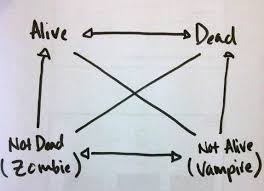
118. Stream of Consciousness: the style of writing that attempts
to imitate the natural flow of a character’s thoughts, feelings, reflections,
memories, and mental images, as the character experiences them.
119. Structure: the planned framework of a literary selection;
its apparent organization.
120. Style: the manner of
putting thoughts into words; a characteristic way of writing or speaking.
121. Subordination: the couching of less important ideas in less
important structures of language.
122. Surrealism: a style in literature and painting that stresses
the subconscious or the nonrational aspects of man’s existence characterized by
the juxtaposition of the bizarre and the banal.
123. Suspension of Disbelief: suspend not believing in order to
enjoy it.
124. Symbol: something which stands for something else, yet has a
meaning of its own.
125. Synesthesia: the use of one sense to convey the experience
of another sense.
126. Synecdoche: another form of name changing, in which a part
stands for the whole.
127. Syntax: the arrangement and grammatical relations of words
in a sentence.
128. Theme: main idea of
the story; its message(s).
129. Thesis: a proposition for consideration, especially one to
be discussed and proved
or disproved; the main idea.
130. Tone: the devices used to create the mood and atmosphere of
a literary work; the
author’s perceived point of view.
131. Tongue in Cheek: a type of humor in which the speaker feigns
seriousness; a.k.a. “dry” or “dead pan”
132. Tragedy: in literature: any composition with a somber theme
carried to a disastrous conclusion; a fatal event; protagonist usually is
heroic but tragically (fatally) flawed
133. Understatement: opposite of hyperbole; saying less than you
mean for emphasis
134. Vernacular: everyday speech
135. Voice: The textual
features, such as diction and sentence structures, that convey a writer’s or
speaker’s pesona.
Sunday, February 17, 2013
I am Here
During the first grading period I have spent the majority of my time focused on studying for the AP Exam by practicing multiple choice questions and essays outside of class. I have also achieved some success in my SMART goal by researching more about neurology and now I have a better understanding. I haven't really made any progress with my senior project because my group hasn't decided what we are going to do for our senior project. I think the reason why we haven't started is because my group rather focus on studying for the AP Exam and worrying about the senior project later.
During the first grading period I have spent the majority of my time focused on studying for the AP Exam by practicing multiple choice questions and essays outside of class. I have also achieved some success in my SMART goal by researching more about neurology and now I have a better understanding. I haven't really made any progress with my senior project because my group hasn't decided what we are going to do for our senior project. I think the reason why we haven't started is because my group rather focus on studying for the AP Exam and worrying about the senior project later.
Tuesday, February 12, 2013
Lit Terms 82-100
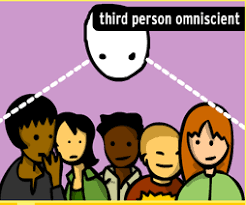






82. Omniscient Point of View:
knowing all things, usually the third person.
83. Onomatopoeia: use of a word whose sound in some degree
imitates or suggests its
meaning.
84. Oxymoron: a figure of speech in which two contradicting
words or phrases are combined to produce a rhetorical effect by means of a
concise paradox.
85. Pacing: rate of
movement; tempo.
86. Parable: a story
designed to convey some religious principle, moral lesson, or general truth.
87. Paradox: a statement
apparently self-contradictory or absurd but really containing a possible truth;
an opinion contrary to generally accepted ideas.
88. Parallelism: the principle in sentence structure that states
elements of equal function should have equal form.
89. Parody: an imitation
of mimicking of a composition or of the style of a well-known artist.
90. Pathos: the ability
in literature to call forth feelings of pity, compassion, and/or sadness.
91. Pedantry: a display of learning for its own sake.
92. Personification: a figure of speech attributing human
qualities to inanimate objects or
abstract ideas.
93. Plot: a plan or scheme to accomplish a purpose.
94. Poignant: eliciting
sorrow or sentiment.
95. Point of View: the attitude unifying any oral or written
argumentation; in description, the physical point from which the observer views
what he is describing.
96. Postmodernism: literature characterized by experimentation,
irony, nontraditional forms, multiple meanings, playfulness and a blurred
boundary between real and imaginary.
97. Prose: the ordinary
form of spoken and written language; language that does not have a regular
rhyme pattern.
98. Protagonist: the central character in a work of fiction;
opposes antagonist.
99. Pun: play on words;
the humorous use of a word emphasizing different meanings or applications.
100. Purpose: the intended result wished by an author.
Tuesday, February 5, 2013
Lit Terms 57-81





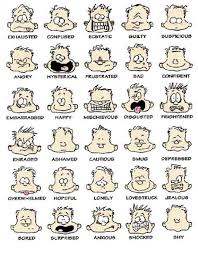


57. Genre: a category or class of artistic endeavor having a
particular form, technique, or content.
58. Gothic Tale: a style in literature characterized by gloomy
settings, violent or grotesque action, and a mood of decay, degeneration, and
decadence.
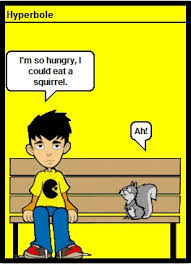
59. Hyperbole: an exaggerated statement often used as a figure
of speech or to prove a point.
60. Imagery: figures of speech or vivid description, conveying
images through any of the senses.
61. Implication: a meaning or understanding that is to be arrive
at by the reader but that is not fully and explicitly stated by the author.
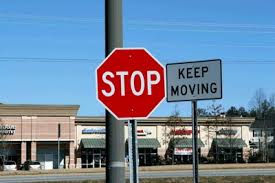
62. Incongruity: the deliberate joining of opposites or of
elements that are not appropriate to each other.
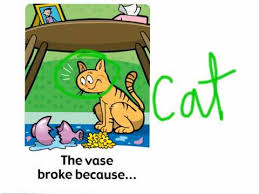
63. Inference: a judgement or conclusion based on evidence
presented; the forming of an opinion which possesses some degree of probability
according to facts already available.
64. Irony: a contrast or incongruity between what is said and
what is meant, or what is expected to happen and what actually happens, or what
is thought to be happening and what is actually happening.
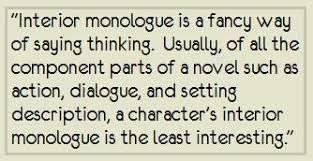
65. Interior Monologue: a form of writing which represents the
inner thoughts of a character; the recording of the internal, emotional
experience(s) of an individual; generally the reader is given the impression of
overhearing the interior monologue.
66. Inversion: words out of order for emphasis.
67. Juxtaposition: the intentional placement of a word, phrase,
sentences of paragraph to contrast with another nearby.
68. Lyric: a poem having musical form and quality; a short
outburst of the author’s innermost thoughts and feelings.
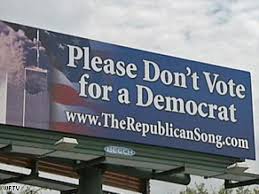
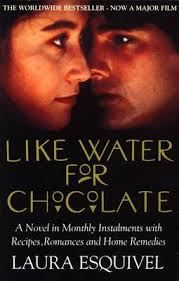
69. Magic(al) Realism: a
genre developed in Latin America which juxtaposes the everyday with the marvelous or magical.
70. Metaphor(extended, controlling, and mixed): an analogy that
compare two different
things imaginatively.
Extended: a metaphor that is extended or developed as far as
the writer
wants to take it.
Controlling: a metaphor that runs throughout the piece of
work.
Mixed: a metaphor that ineffectively blends two or more
analogies.
71. Metonymy: literally
“name changing” a device of figurative language in which the name of an
attribute or associated thing is substituted for the usual name of a thing.
72. Mode of Discourse:
argument (persuasion), narration, description, and exposition.
73. Modernism: literary
movement characterized by stylistic experimentation, rejection of tradition,
interest in symbolism and psychology
74. Monologue: an
extended speech by a character in a play, short story, novel, or narrative
poem.
75. Mood: the
predominating atmosphere evoked by a literary piece.
76. Motif: a recurring
feature (name, image, or phrase) in a piece of literature.
77. Myth: a story, often
about immortals, and sometimes connected with religious rituals, that attempts
to give meaning to the mysteries of the world.
78. Narrative: a story or
description of events.
79. Narrator: one who narrates,
or tells, a story.
80. Naturalism: extreme form of realism.
81. Novelette/Novella: short story; short prose narrative, often
satirical.
Dickens CLAQ's
The book I am going to analyze is "Great Expectations," by Charles Dickens. I am going to remix the questions by just writing about the novel and some of the literary techniques used but not in the same format as the LAQ's.
Pip is an orphan who is extraordinarily sensitive and intelligent. Pip was affected early in his childhood when he met Magwitch which is the type of person that every parent wants their kids to avoid. Ms. Havisham is a woman who still wears who wedding dress because that was the most revolutionary day of her life when she was left at the altar. Ms. Havisham represent decay and promise to Pip. Pip views Havisham as an ideal adult because she must have done something right because she is wealthy and adopted Estella. Joe and Jaggers can be interpreted as complete opposites in the novel because Jaggers doesn't know how to keep a secret and he likes to gossip which was a huge impact during the times of Victorian England. Joe lives by feeling and has a poetic, romantic view of the world. Another interesting character is Wemmick because his attitude depends on his environment, I consider him bipolar because he is a different person at work then he is at home. Their are 4 revelations in the novel that Pip discovers throughout his life span. First, Ms. Havisham is not Pip's fairy godmother. Second, Estella is not intended for Pip, I interpreted Estella as a tease. Third, Magwitch has contributed to Pip's expectations. Fourth, KARMA....that is all. Pip's view of the world is that their is good within the bad. Pip inherits Joe's emotional idealism but, his most intriguing quality is his abilities to fantasize. Pip wants all the rewards but none of the consequences, which causes him to become a snob. Pip represents his own flaws by talking bad to everyone. My favorite attribute of the novel is that it takes place in the real world as well as fantasy.
Literary Techniques
Imagery- "She reserved it for me to restore the desolate house, admit the sunshine into the dark rooms, set the clocks a-going and the cold hearths a-blazing, tear down the cobwebs, destroy the vermin - in short, do all the shining deeds of the young Knight of romance, and marry the Princess."
Syntax- "Then, Estella being gone and we two left alone, she turned to me, and said in a whisper: 'Is she beautiful, graceful, well-grown? Do you admire her?'
Diction- "He had struck root in Joe's establishment, by the reason of my sister's sudden fancy for him, or I should have tried to get him dismissed. He quite understood and reciprocated my good intentions, as I had reason to know thereafter."
The book I am going to analyze is "Great Expectations," by Charles Dickens. I am going to remix the questions by just writing about the novel and some of the literary techniques used but not in the same format as the LAQ's.
Pip is an orphan who is extraordinarily sensitive and intelligent. Pip was affected early in his childhood when he met Magwitch which is the type of person that every parent wants their kids to avoid. Ms. Havisham is a woman who still wears who wedding dress because that was the most revolutionary day of her life when she was left at the altar. Ms. Havisham represent decay and promise to Pip. Pip views Havisham as an ideal adult because she must have done something right because she is wealthy and adopted Estella. Joe and Jaggers can be interpreted as complete opposites in the novel because Jaggers doesn't know how to keep a secret and he likes to gossip which was a huge impact during the times of Victorian England. Joe lives by feeling and has a poetic, romantic view of the world. Another interesting character is Wemmick because his attitude depends on his environment, I consider him bipolar because he is a different person at work then he is at home. Their are 4 revelations in the novel that Pip discovers throughout his life span. First, Ms. Havisham is not Pip's fairy godmother. Second, Estella is not intended for Pip, I interpreted Estella as a tease. Third, Magwitch has contributed to Pip's expectations. Fourth, KARMA....that is all. Pip's view of the world is that their is good within the bad. Pip inherits Joe's emotional idealism but, his most intriguing quality is his abilities to fantasize. Pip wants all the rewards but none of the consequences, which causes him to become a snob. Pip represents his own flaws by talking bad to everyone. My favorite attribute of the novel is that it takes place in the real world as well as fantasy.
Literary Techniques
Imagery- "She reserved it for me to restore the desolate house, admit the sunshine into the dark rooms, set the clocks a-going and the cold hearths a-blazing, tear down the cobwebs, destroy the vermin - in short, do all the shining deeds of the young Knight of romance, and marry the Princess."
Syntax- "Then, Estella being gone and we two left alone, she turned to me, and said in a whisper: 'Is she beautiful, graceful, well-grown? Do you admire her?'
Diction- "He had struck root in Joe's establishment, by the reason of my sister's sudden fancy for him, or I should have tried to get him dismissed. He quite understood and reciprocated my good intentions, as I had reason to know thereafter."
Saturday, February 2, 2013
The Time of My Life
Today in class I spent the majority of the day discussing my SMART goal and my other group members SMART goals. We discussed how far we have progressed in achieveing our SMART goal. My group also discussed how we were going to prepare for the AP Exam on our free time and how it will make us better writers.
Today in class I spent the majority of the day discussing my SMART goal and my other group members SMART goals. We discussed how far we have progressed in achieveing our SMART goal. My group also discussed how we were going to prepare for the AP Exam on our free time and how it will make us better writers.
Subscribe to:
Posts (Atom)